
New York Cheesecake -- This is the One!
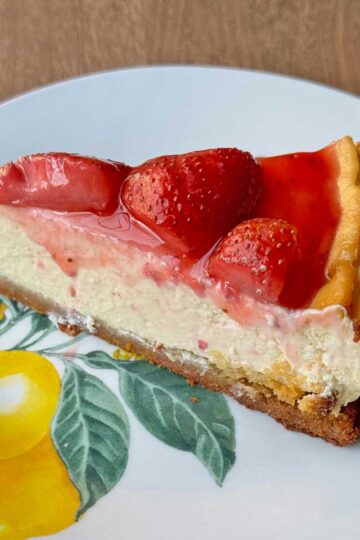
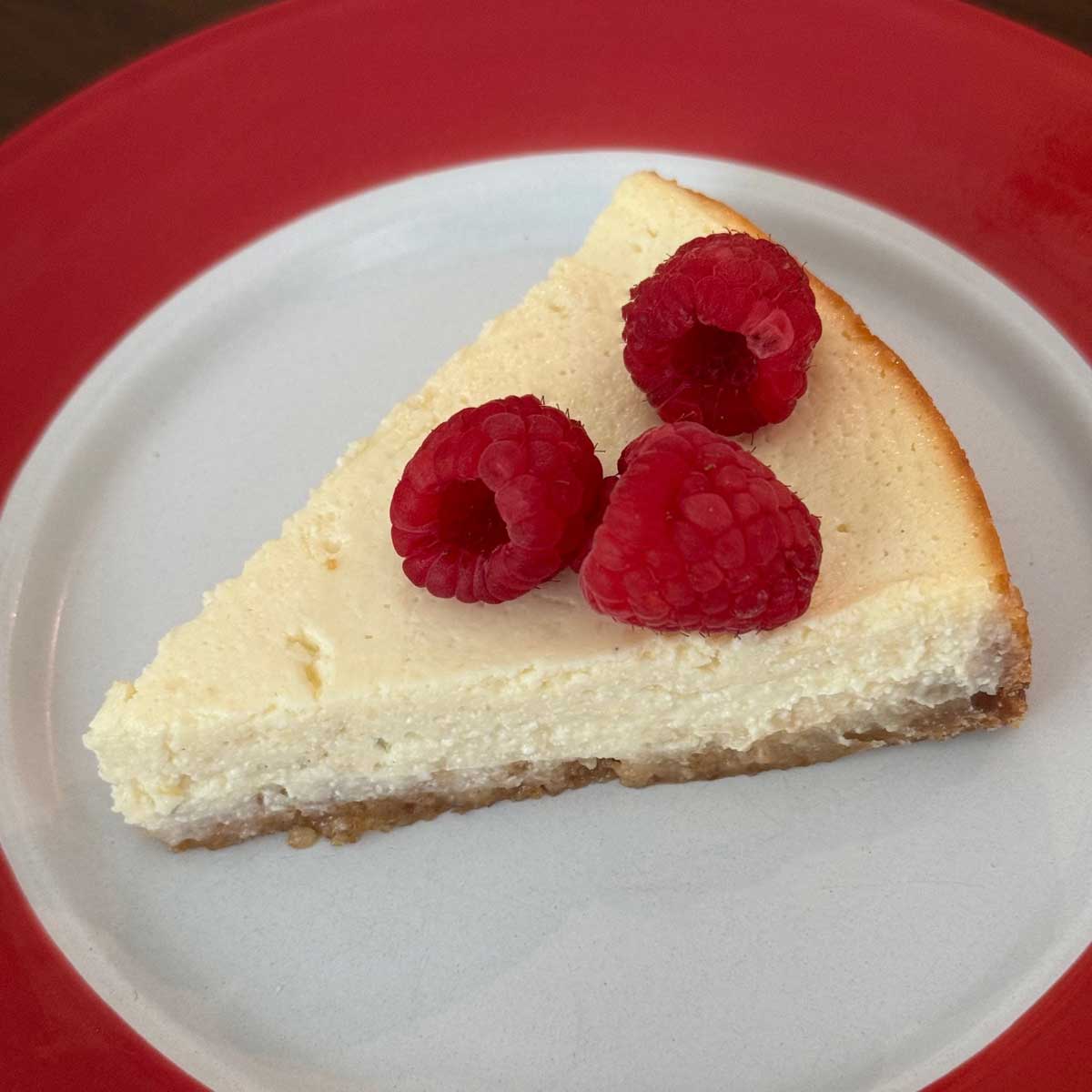
If you haven't perfected classic New York cheesecake, here's a recipe worth trying in the new year. I've made it twice in the past two weeks and think it might be our new go-to cheesecake. Or at least I hope. I need to stop hopping from one cheesecake recipe to another.
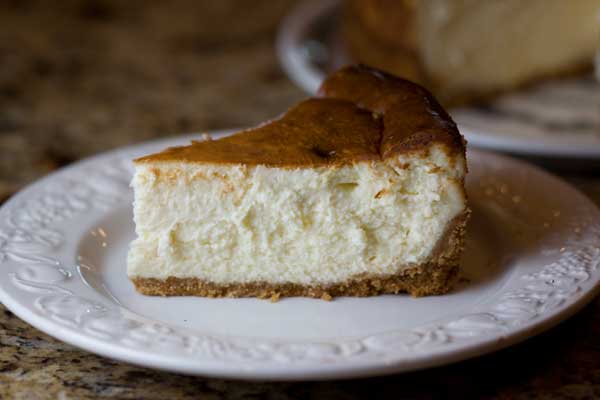
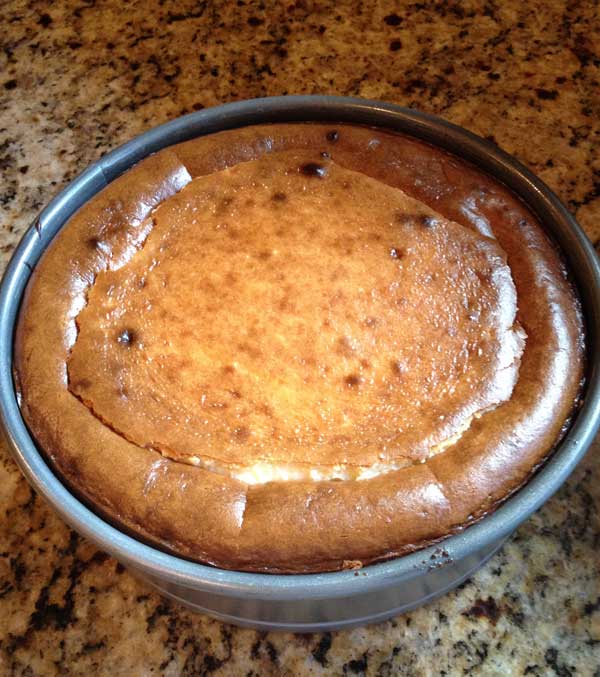
This New York cheesecake is good. The first time I made it, it was on the dense side and the top burnt. Carefully skimming off the burnt part and covering it with cherry topping was my short-term solution, but I had to bake it again to get it just right.
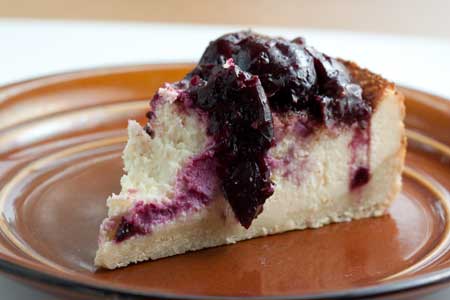
With a few adjustments and a completely new crust, the second round was great.
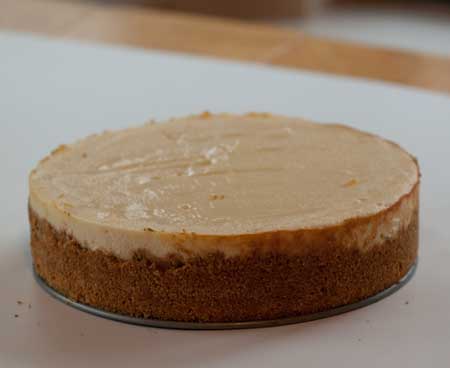
I've made this cheesecake several times since posting it and have updated the recipe yet again. I no longer use a water bath, and I've changed the baking times and temps. Some recipes call for baking this at temperatures up to 500 or even 550 F. Be careful! I've found that anything over 500 is just too much for a normal wall oven. But all ovens are different, so you never know. Also, this recipe was originally known as the Lindy's Cheesecake and one component was a shortbread crust. I prefer a graham cracker crust, and since that takes up less room in the pan, a 9 inch size cheesecake pan is big enough. Versions made with the shortcake crust are usually best made in a 10 inch cheesecake pan.
Recipe
New York Cheesecake
Ingredients
Crust:
- 2 cups graham cracker crumbs
- ¼ cup granulated sugar
- 8 tablespoons butter salted or unsalted is fine
Filling:
- 5 packages 8 ounces each cream cheese, softened
- 1 ¾ cups sugar
- 2 teaspoons lemon zest
- ½ teaspoon vanilla extract
- 5 large eggs room temperature
- 2 large egg yolks room temperature
- 3 tablespoons all-purpose flour
- ¼ cup heavy cream
Instructions
- Preheat the oven to 475 degrees F.
- Grease a 9 inch round springform pan. Mix all the crust ingredients and press into the pan, going about ½ inch up the sides. This crust is not baked ahead of time. Keep in the refrigerator until ready to fill.
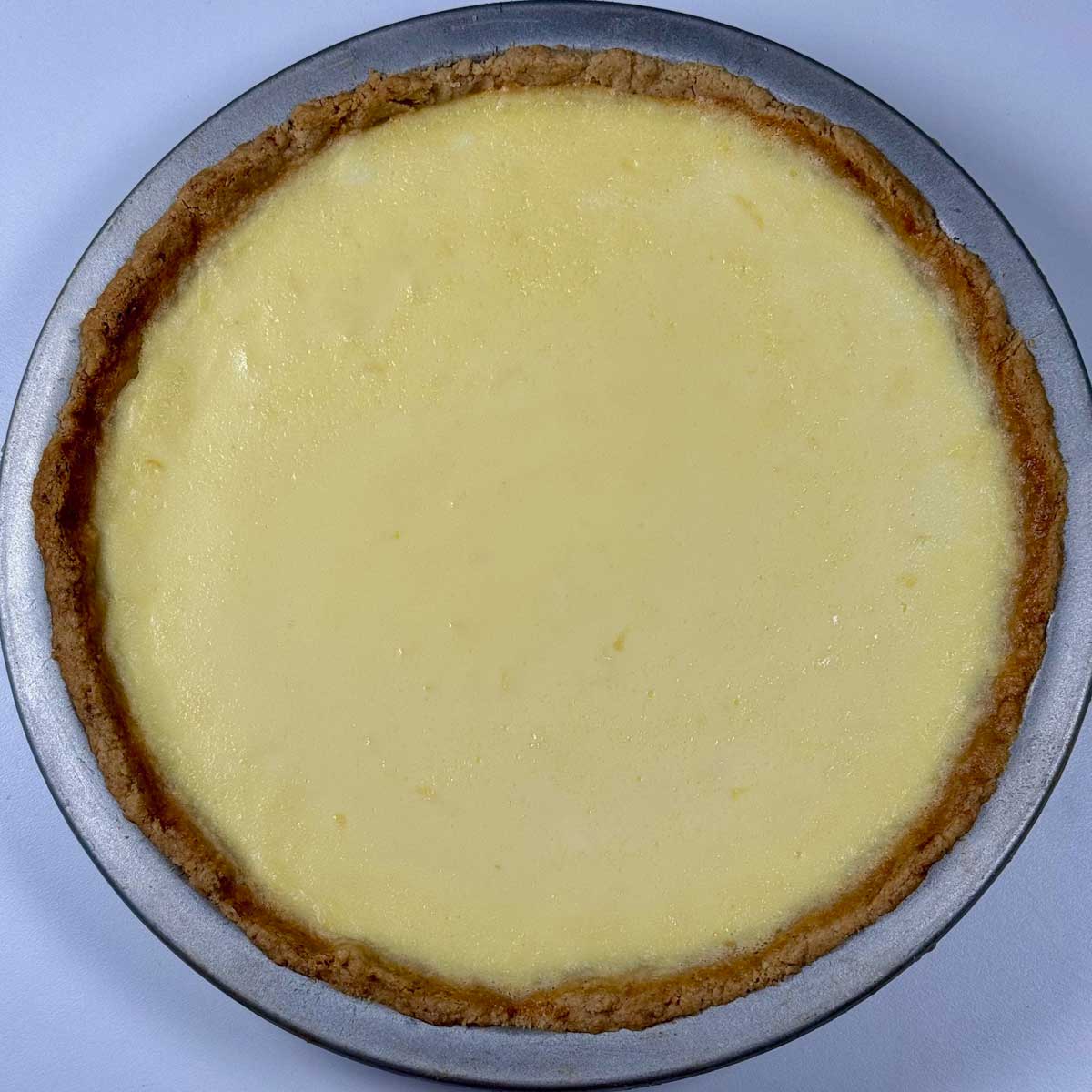
- In a large mixing bowl or the bowl of stand mixer, beat the cream cheese, sugar, lemon zest and vanilla until well mixed. With mixer on low, add the eggs one at a time, beating on low and being careful not to add a lot of extra air to the batter. Add the yolks. With the mixer still on low, add the flour and cream. Pour into the prepared pan and drag a spatula through the batter to remove air bubbles. Let stand for about 10 minutes and drag the spatula again.
- Put the cheesecake on a rimmed baking sheet to catch any drips.
- Bake in lower third (right below center) of oven for 12 minutes. Without opening door, reduce heat to 300 F. and bake another 35 minutes. Turn off the oven and let cheesecake sit in closed oven for 30 minutes. Remove from oven and let cool for 15 minutes, then run a knife between the sides of the cheesecake and the pan without removing the sides. Let cool completely, then chill overnight.
Sue says
I made this for my husband's birthday. We think it's excellent! Thanks for another GREAT recipe!
jersey Girl Cooks says
Mmmmnnn cheesecake! Happy holidays to you and your family, Anna!
Anna says
I like the parchment idea, but I think it's high time I invested in some 3 inch deep pans. Off to to do more post-holiday web shopping!
Beverly says
Ah, but there's nothing like TALL creamy cheesecake. I like deep 6 inch and 7 inch diameter pans for smaller cheesecakes-half this wonderful classic recipe. If pans are only 1-1/2 to 2 inches tall, cut a strip of parchment to be twice as long as needed to line the pan and 6 inches wide. Fold the strip in half lengthwise; this will provide extra support for the cheesecake batter. Spray the pan bottom and sides with PaM (to stick the parchment). Lay the long strip of parchment inside the Pam, encircling the pan twice. This should provide adequate support to fill the pan about a half inch above the pan rim. Tip: pour only half the batter into the lined pan and then fill with remaining batter after you have set the pan into the water bath pan on the oven rack.
Anna says
Thanks for the unmolding tips! Also, your method reminded me that *somewhere* I have a smaller yield cheesecake recipe that you can bake in a regular 1 3/4 to 2 inch depth 8 or 9 inch round cake pan. I'd forgotten all about that one, but with a small family it comes in handy. We're still trying to finish this one. At any rate, I'm going to try your method for taking it out of the pan. I think I just used non-stick foil and lifted it out.
Beverly says
This is also my favorite cheesecake recipe.... and as a professional pastry chef, I have made a lot of cheesecakes. I water bath all my cheesecakes and bake them, in a 3 inch deep non-spring form pan [lined with parchment- a circle for the bottom and a strip to line the sides of the pan] in a 300 degree oven for 1 hour+15-30 minutes. To test for doneness, gently shake the pan, center should jiggle, but not be 'sloshy.' Lift cheesecake out of water bath and cool on a rack. Lay a sheet of foil on top to prevent drafts which can cause cracking. Cool and chill cake before unmolding. To unmold, with both hands, spin the pan over a stovetop burner on low flame to loosen. Spray the sheet of foil, lay over cake and invert onto flat cookie sheet. Peel off parchment. Reinvert cake. PS:I'm not a fan of graham cracker crusts, but crushed gingersnaps, vanilla wafers, or chocolate ice box cookies are good alternatives.
Katrina says
Happy Holidays, Ginsbergs!
Gloria says
This looks like the perfect cheese cake...no sour cream and a simple straightforward rich crust. I am in Fort Myers right now so no baking other than the weather baking us! I can't believe Texas has more snow than Minnesota!!! Merry Christmas to all who celebrate!
Sue says
Your cheesecake looks so good! Merry Christmas to you and your family!
Chewthefat says
Selfishly, I hope you never find the 'perfect' cheesecake, because I enjoy reading about your experiments so much! However, that one looks beautiful! That crust looks fantastic! I know some famous cheesecakes don't have crusts (like Junior's) but perhaps because I'm not a huge 'cheesecake person' I really like the texture of the crust next to a dense cheesecake.
I wonder if a burned cheesecake could be marketed as 'Cajun Cheesecake' though...
Anna says
Hi Heather,
Good luck with the cheesecake! This one shouldn't crack at all. Even the one I over-baked didn't have a crack (just a burnt top!).
Heather @ Bake, Run, Live says
I am going to try your baking method, as I really dislike cracks in my cheesecake- hurts my pride (or something like that)!