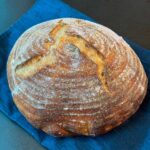
Basic Sourdough Bread
A basic sourdough loaf you can make in one day or overnight.
Servings 12 slices
Cost 5
Ingredients
- 60 grams active sourdough starter bubbly, at peak
- 300 grams water room temp to slightly warm
- 400 grams bread flour
- 1 ¼ teaspoons salt about 8 grams
Instructions
- In a large bowl or a big plastic tub, stir together the starter and water.
- Add 400 grams of flour and stir with a heavy duty scraper until it is fully mixed and no dry flour remains. Keep the salt nearby, but don't add it yet.
- Cover with a piece of plastic wrap and let rest for 45 minutes. This helps the hydrate the flour and improves gluten-development.
- After the rest, sprinkle the salt over the dough. Loosen dough from sides of the bowl or tub. Use a heavy scraper to work in the salt by folding the dough over on itself and squishing it around.
- Cover the bowl and let rise for 4 to 6 hours. For the first 2 hours, do 3 to 4 stretch-and-folds every 30 minutes or so.
- After that, let the dough rest undisturbed until it looks puffy and has risen about 50–75% (not doubled).It should start to look smoother, and shinier and jiggle slightly when the bowl is moved
- Turn the dough into a banneton dusted generously with rice powder. Do a stretch and fold or two to give it a ball like form, but expect it to go slack again as it rises.
- If making the one-day version, let rise in the banneton for 1 ½ hours.
- If making the two day version, let rise in the banneton for about 2 more hours, then cover and transfer to the refrigerator to chill overnight.
- Preheat oven to 450 degrees F. with a Dutch oven inside. This should take at least 30 minutes.
- Carefully turn the dough from the banneton onto a sheet of parchment paper. It will deflate slightly and spread out, but don't worry because it should puff up once in the pan and covered. The important thing is that it is airy and bouncy.
- Carefully make a slash in the top of the dough with a razor. It will feel a little awkward since the dough is so soft, but you should be able to make a cut. Lift parchment with the dough and set in the hot Dutch oven. Cover and bake with the lid on for 25 minutes at 450F.
- Reduce heat to 375. Uncover and bake 25 minutes until deep golden brown.
- Let cool for at least an hour before slicing.