
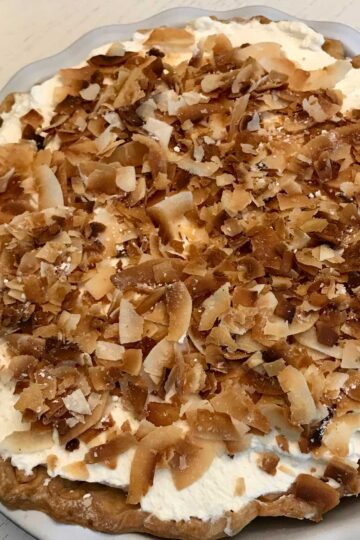
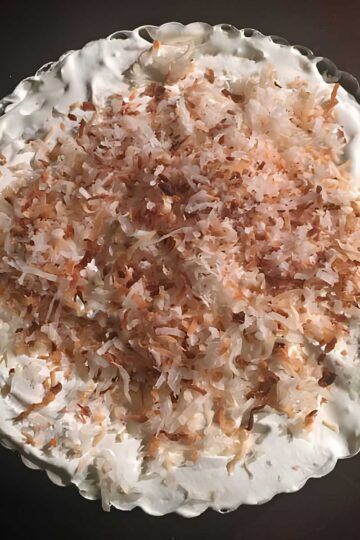
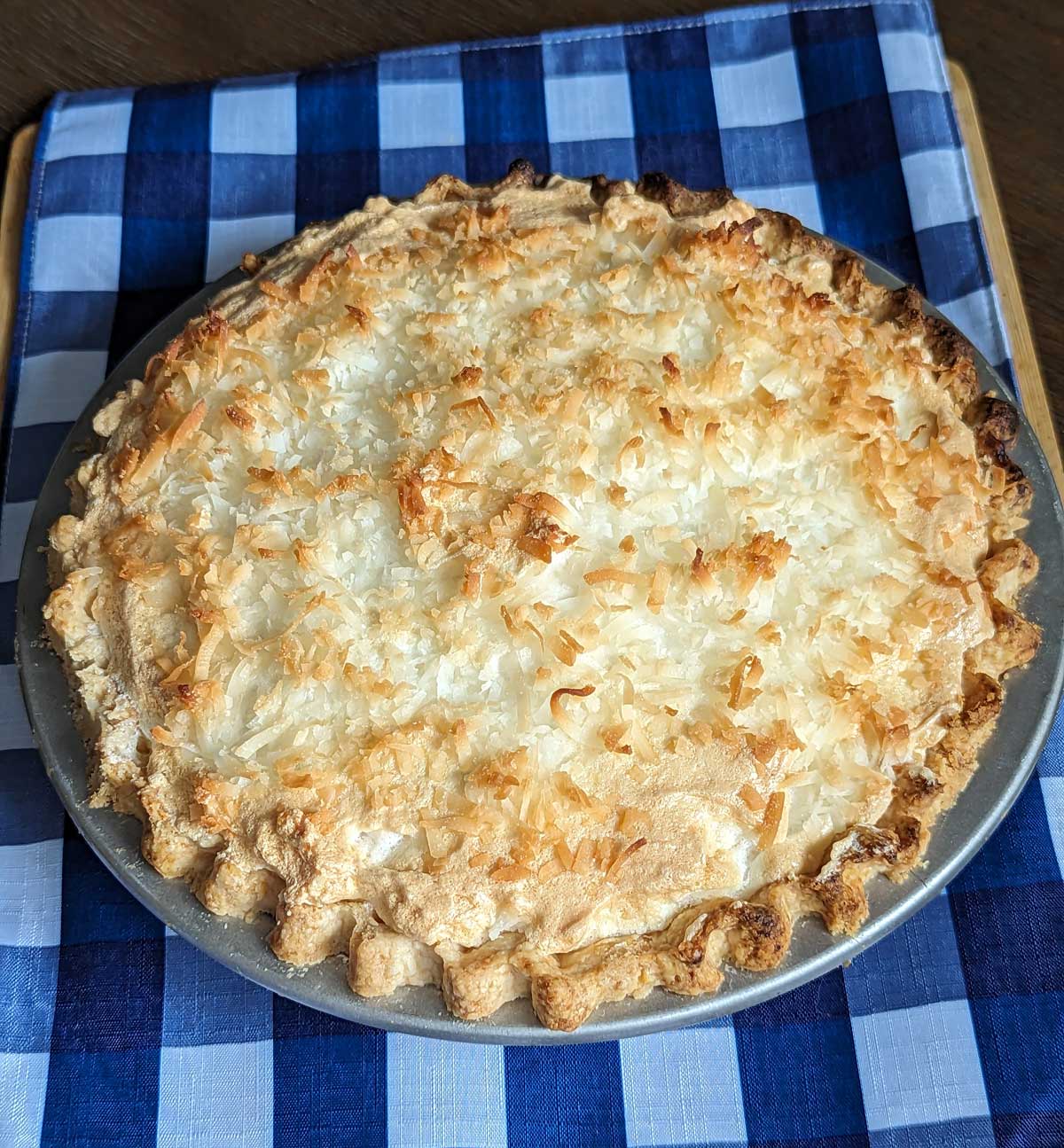
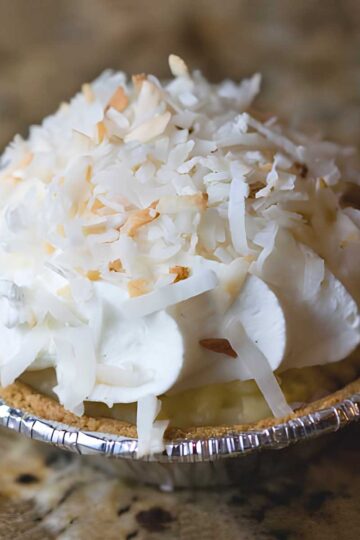
I've made this butterscotch pie recipe many times since posting, and it's evolved over the years. Below are some photos that testify to that. I've also included a few tips.
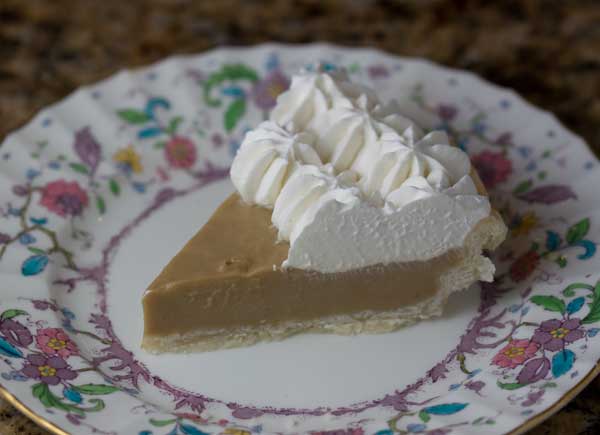
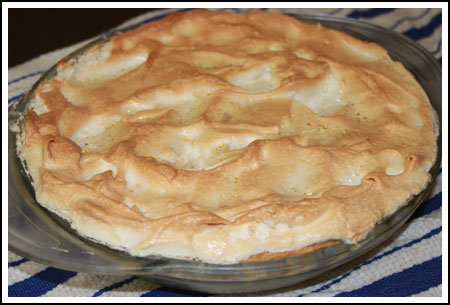
First, the recipe is based on this one, but with some changes. For instance, I now prefer a whipped cream topping rather than meringue. Meringue is good too, but whipped cream tastes richer and more satisfying.
Second, I use half dark and half light brown sugar because the dark brown adds more flavor. Sometimes I use ⅔ dark and ⅓ light.
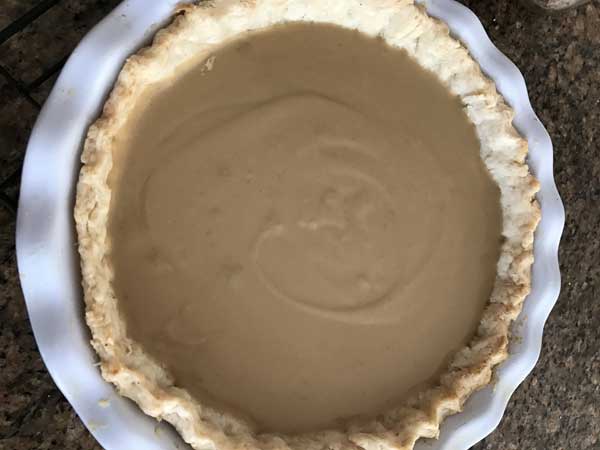
Third, warming the milk speeds things up, so I warm the milk in the microwave. I also use whole milk, as reduced fat just doesn't keep this pie stiff.
Fourth, use European style butter if possible. You can use regular butter, but the European style makes the pie a little richer and more flavorful.
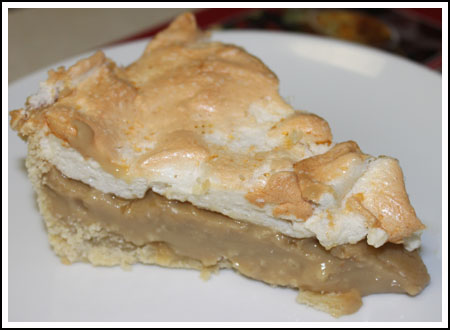
Finally, for the crust I recommend a plain pastry crust such as Best Ever Pie Crust as opposed to a graham cracker crust.
Recipe
Butterscotch Pie -- The Best for Now
Ingredients
- 1 9 inch pie crust homemade or store-bought, baked
- 3 large egg yolks room temp
- 2 cups whole milk
- 4 tablespoons flour
- 1 big pinch salt
- 4 tablespoons butter European style or Land o Lakes**
- ½ cup light brown sugar
- ½ cup dark brown sugar
- 1 teaspoon vanilla extract
Whipped Cream
- 1 cup whipping cream
- 2 tablespoons granulated sugar
- 1 teaspoon vanilla
Instructions
- With a fork, mix the three egg yolks together in a small cup or bowl.
- In a large, microwave-safe glass measuring cup, warm the milk,
- In a second bowl, whisk flour with half of the warm milk, until smooth.
- Whisk the egg yolks and the salt into the milk/flour mixture, then whisk in the remaining cup of warm milk. Set aside.
- Place the butter in a saucepan and soften it a little over medium heat. Add the brown sugar and whisk or stir for about 2 minutes or until butter is melted and sugar has dissolved. Whisk the milk mixture into the saucepan. Continue whisking constantly over medium heat until mixture thickens and bubbles - this should only take 2-3 minutes. After big bubbles start to form, continue whisking for another 2 minutes.
- Remove from heat and stir in the vanilla. Lay a sheet of greased waxed paper directly over the top to prevent a skin from forming and let cool for about half an hour at room temperature.
- Transfer to the baked pie shell and chill thoroughly.
- Shortly before serving, prepare the whipped cream. In a chilled metal bowl using chilled beaters, beat the cream and sugar until stiff peaks start to form. Beat in the vanilla. Pipe around edges of the pie.
Anna says
Fuzz, thanks for the review and for letting us know that cornstarch can replace the flour. Glad you liked it!
Fuzz says
I make a different pie for my housemates every week, and the consensus is that this recipe is everyone's current favorite! I made the pie late in the morning and needed it to set within a few hours, so I substituted the flour for cornstarch 1:1. The pie set up perfectly - the texture was soft but held its shape with no problem and sliced cleanly. The filling was simple and quick enough to make while the crust was in the oven. I was specifically making a butterscotch cinnamon pie, so I whisked a tablespoon of cinnamon into the milk + dry thickener mixture before putting it on the stove. The deep flavor of the dark brown sugar was great, and not cloyingly sweet like some other butterscotch pies I've tried. My friends are already asking me to make this one again, which I'm happy to do since it's such a smooth and simple recipe!
Barb says
I grew up with grandma making this pie for me constantly... She made it with dark and light brown sugar and on stove top in cast iron skillet! I am so happy to find this again, as I lost my original!!!! I can not thank you enough!!! Really
Stacie @ Imperfectly Healthy says
Mmmm...meringue - I can't help but think of my Granny every time I see a pie with meringue. Yum!
Anna says
Louise, I like the recipe where he combines regular flour with cake flour and throws in an egg yolk.
Crust Recipe – Adapted from Greg Patent
1 cup all purpose flour (4.5 oz)
1/3 cup cake flour (1.5 oz)
1/4 teaspoon salt
8 tablespoons cold unsalted butter, cut-up
1/4 cup ice water
1 egg yolk
1/2 teaspoon cider vinegar
In bowl of food processor, combine flour, cake flour and salt. Pulse to mix. Alternatively, you can mix the flours and salt in a big bowl. In a separate bowl, stir together ice water, egg yolk and vinegar.
Pulse flour mixture four or five times or until mixture appears chunky. If you’re doing this by hand, scatter the cut up butter over the flour and knead it in with your fingertips or a pastry cutter until you get pea size lumps.
Pour the egg yolk mixture in a thin stream through the feed tube, pulsing constantly, until mixture forms several large chunks and almost gathers into a ball. If you’re doing this step by hand, pour in the egg and use a heavy duty scraper to gently push the dough together – push it up against the sides of the bowl to form the almost-ball.
Spread a large sheet of plastic wrap on the counter. Empty mixture onto the plastic wrap and press into a 1 inch thick disc. Wrap the dough in plastic wrap and chill for one hour.
Unwrap the dough and place it on a lightly floured surface. Roll dough into a 12 inch circle. Fold the circle in half, then fold in half again, and place the point in the center of a 9 inch Pyrex pie plate. Carefully unfold the dough and fit it into the pan by nudging it gently into the pan without stretching it. Trim the excess pastry to a ½ inch overhang. Fold the edge back under itself toward the side of the pan, and pinch the double thickness to make a high-standing rim. Flute it by pinching it at ½ inch intervals to make a zigzag pattern. Chill the lined pie plate for another hour or put it in the freezer for 25 minutes.
Adjust oven rack to center position. Preheat to 400 degrees F.
Place a large square of foil (Release foil is great for this) over unbaked pie crust and press gently over the bottom and sides. Fill the shell with dried beans or set pie weights in center. Bake for 20 minutes, until the edges of the pastry just begin to brown. Remove from the oven and carefully lift out the foil and weights. Prick the bottom of the pastry evenly with a fork, return to the oven and continue baking until golden brown and cooked through - 10 to 15 minutes more. Cool completely before filling.
Anna says
Cindy, I know I made an oil crust at one point. It's been a while, but I'll try it again.
Anna says
Hi Shelly,
I think it did make it a little sweeter even though I didn't pack it. It tasted good and had a richer, deeper flavor. But I think you are right in that the "deeper" flavor (as I described it) is just more molasses. It's a tough call as to what's really better. I preferred the third pie, but the second one was perfectly good.
Clara Curtis says
Oohh! That looks really good! I don't think I've ever had butterscotch pie, but I've had the candy and oh is it ever good.
I will definitely try out a recipe sometime soon!
Louise says
My vote is for the Greg Patent basic pie dough that's half butter and half lard. It's great for all pies.
CindyD says
Have you ever tried an oil pastry crust? That's my go-to pie crust because it cuts the fat/cholesterol a bit and we really like the flakiness. I also have good luck rolling it between two sheets of wax paper.
Shelly says
Wow! Now that is interesting that you used dark brown sugar (dbs)with the butterscotch. DBS has more molasses in it then the light brown sugar. I would have thought it would conflict with the butterscotch and made it overly sweet. Thanks Anna for getting the old noggin to rethink some of my families butterscotch recipes (a big hit with this clan)!
Amanda says
I wonder how this would be in a shortbread crust? Dorie Greenspan's book has one that rocks. 🙂 Glad the pie turned out!!
Magic of Spice says
Looks pretty good to me:)