
Ciabatta is an oblong, crusty, chewy, Italian bread named for its shoe-like shape. There are thousands of recipes for it, but like other yeast bread recipes, it may take trial and error to find the one that works for you. This is a simple small batch Ciabatta recipe that works well for me. It takes very little active time, but requires some passive refrigeration time. If using active dry yeast, you'll need about 8 hours. With quick rise, you can have it ready in less than 5.
Delayed Salt Method
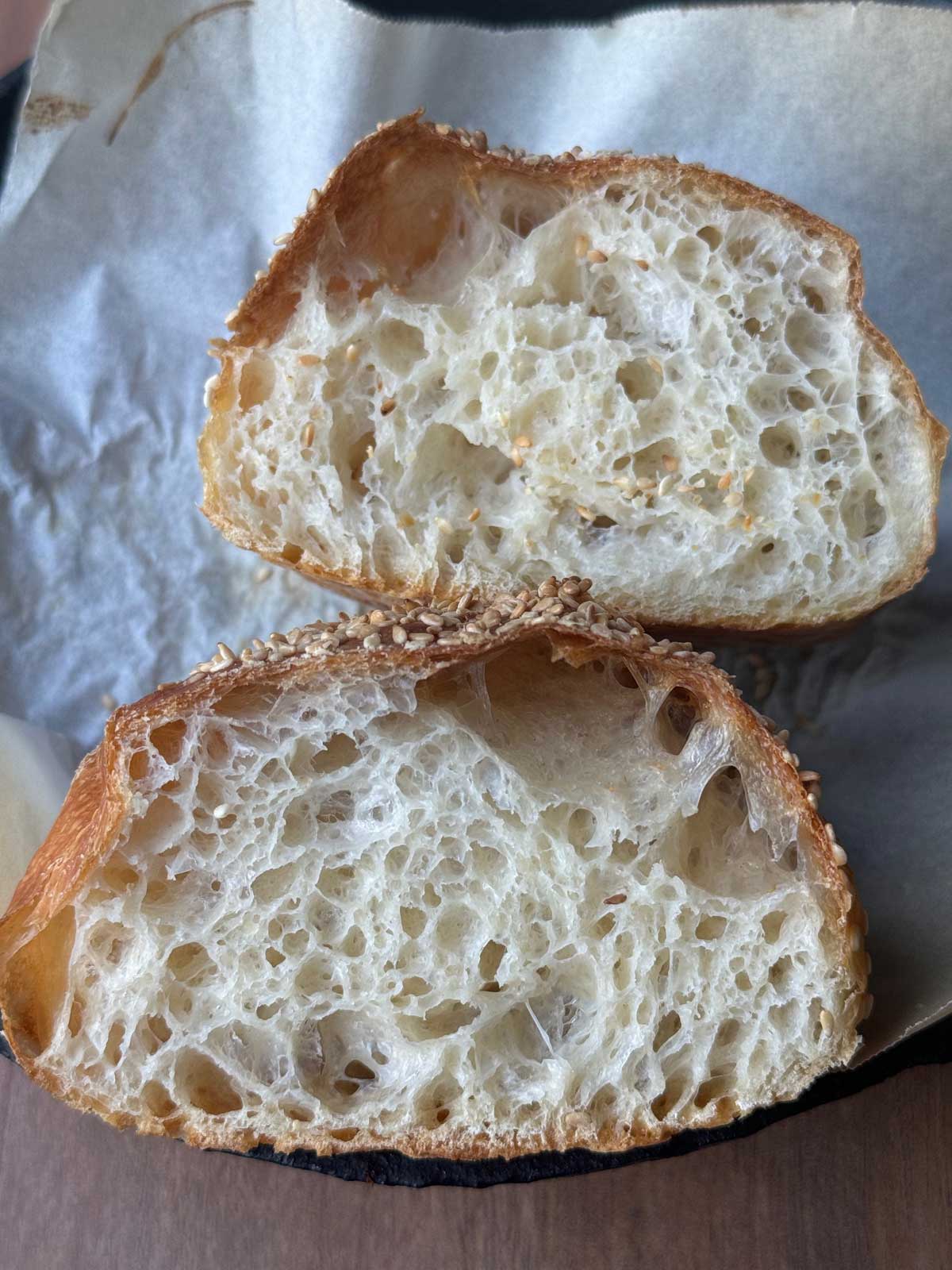
One thing I like to do with ciabatta is add the salt a little later in the process. For high hydration breads like ciabatta, delaying the salt gives the yeast time to create big, beautiful air pockets. The result is a lighter, more open crumb with plenty of flavor. The trade-off is that the salt isn't always perfectly evenly distributed, but in the end it's not a huge deal unless for some reason there's a huge clump of salt, which isn't likely.
Steps For Small Batch Ciabatta
Here's a quick rundown of steps. This is for a batch that takes about 8 hours if using active dry yeast. If using quick rising yeast, give yourself 4 to 5 hours.
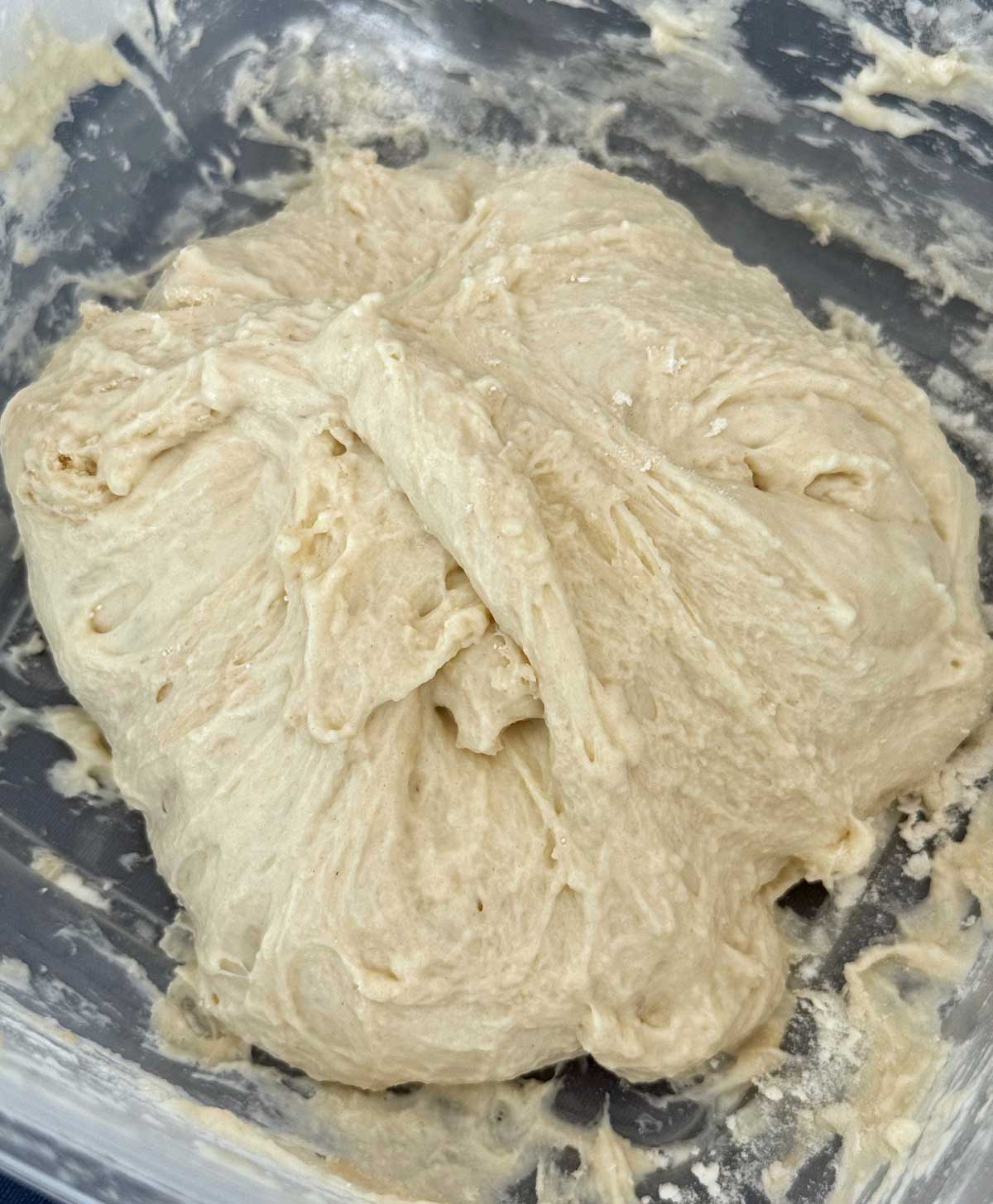
- Mix flour, warm water and yeast together in a container or bowl. Let this mixture stand and hydrate for 1 hour, doing a series of stretch and folds every 20 minutes.
- Put dough in the refrigerator and chill for 4 or 5 hours if using quick rising yeast, or 7 to 8 hours if using active dry.
- About halfway through the chill time, remove dough from the refrigerator, sprinkle salt over the dough, then work it in by doing more stretch and folds.
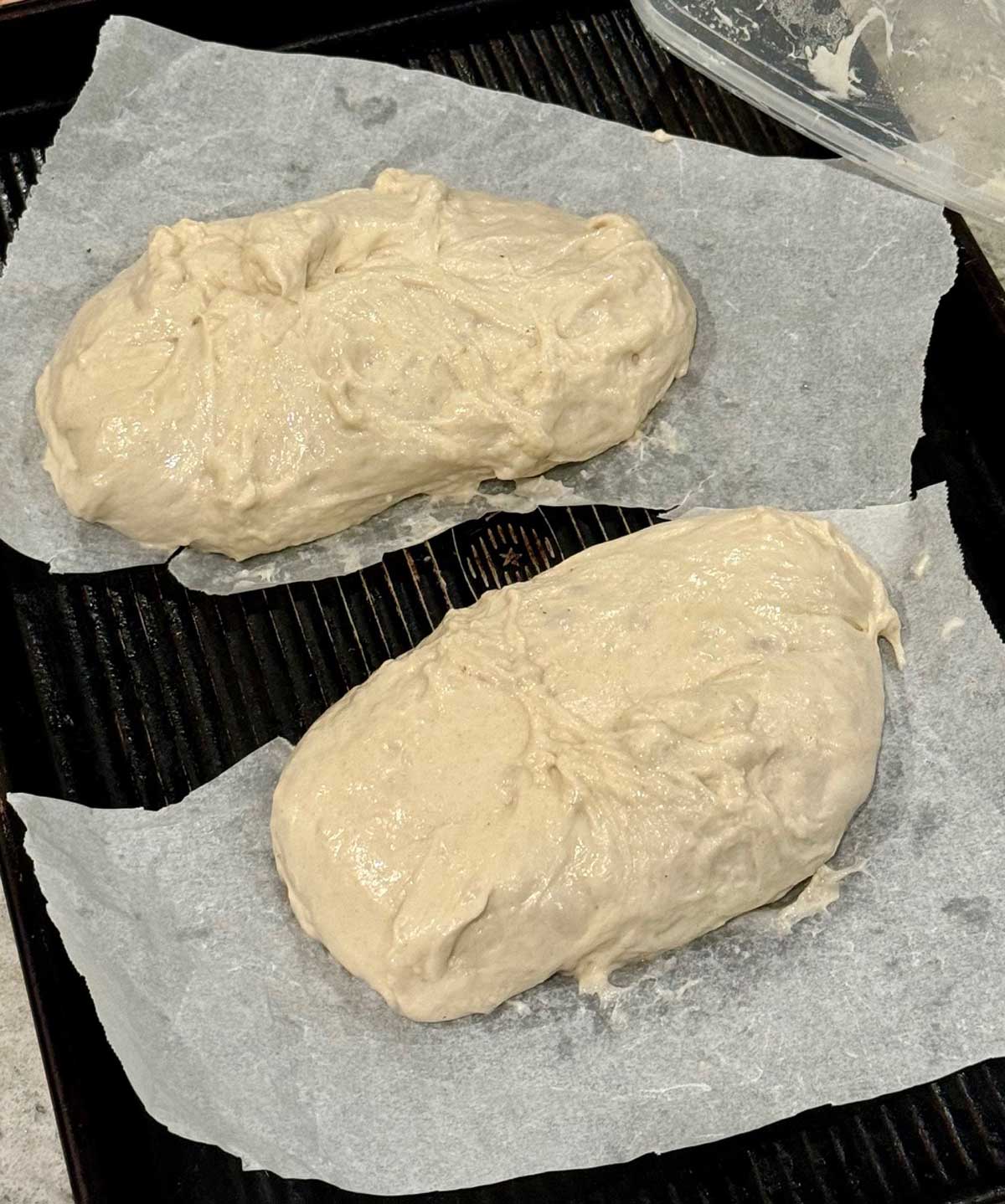
- Preheat the oven to 475 F, then tip the container of cold dough onto a piece of flour-dusted parchment. Cut straight through with a chef's knife to make two oblong loaves.
- Lastly, slide parchment and loaves onto the stone. Bake for about 20 to 25 minutes.
That's it! There's no kneading of the dough and you don't need a stand mixer, just a good heavy duty scraper. With the delayed salt method, the salt may not be as evenly distributed, but as long as you do your best to disperse it the bread will have salty flavor in each bite. I sometimes salt the outside of the loaf as well or add sesame seeds.
Equipment
- Use whatever tub or bowl is convenient. The one I use is square and holds 9 cups. It has a lid which is handy.
Sourdough Discard Version
This ciabatta doesn't require any sourdough discard, but if you happen to have some and want to incorporate it, you can. It will give the ciabatta a different flavor, and you should still get big, airy, pockets. For the sourdough discard version, use 150 grams of water and add 100 grams of sourdough discard along with the yeast. Use only about 200 grams of bread flour.
Disclaimer
I wasn't sure if I'd post this but this recipe always works so well for me. Since I'm not a professional bread baker, I welcome hints and tips from everyone. The thing is, this recipe (for whatever reason) always gives me the biggest, fluffiest, ciabatta. Maybe I'll jinx it by posting this, but I hope it works well for someone else out there.
Recipe
Small Batch Ciabatta
Ingredients
- ¾ teaspoon salt (Morton kosher)
- 200 grams warm water (110 degrees F)
- 1 teaspoon active dry yeast or quick rise yeast
- 225 grams bread flour, King Arthur or Bob's Red Mill artisan
Instructions
- Keep the salt nearby so that you won't forget it. I put it in a teaspoon, set the teaspoon on a plate and put it somewhere on the counter where I'll see it later.
- In a medium size bowl or plastic tub, mix together the warm water and yeast. Add the flour and stir until flour is completely moistened. Cover the bowl and let stand for 60 minutes.
- During this 60 minute standing time, you are going to do a series of stretch and folds every 20 minutes. Using a heavy duty scraper, scrape the dough away from the sides of the tub. Put a little water on your fingers and pull the corners of the dough up and over as far as you can attempting to shape into a ball. Do this with all four corners, four times, using the scraper to scrape dough away from the sides.
- After an hour of letting it sit and doing occasional stretch and folds, cover and refrigerate. If making with active dry yeast, refrigerate for 8 hours. If using quick rising yeast, plan on 4 to 5 hours.
- About halfway through the rising time, remove the bowl from the refrigerator and sprinkle salt over the cold dough. Do as many stretch and folds as you need to to work the salt into it. Cover and continue to refrigerate until ready to bake.
- Preheat the oven to 475 degrees. If you have a pizza stone, preheat with the stone. If you don't have a stone you can use a cast iron skillet or an inverted sheet pan.
- Remove dough from the refrigerator. Lay a large piece of parchment paper on a rimless baking sheet or something the parchment can slide off of (pizza peel would be ideal). Dust lightly with flour.
- Loosen though dough from the sides of the tub. Tip the container and scrape the cold, bouncy, risen dough onto the floured parchment. It will naturally deflate a bit as you pour it out of the tub. Dust the top of the dough lightly with flour and with a chef's knife, slice down in one motion to cut it in half and make two oblongs.
- Let the cold dough stand for only about 10 minutes to relax.
- Slide the parchment and loaves onto the hot stone. Bake for 25 minutes or until golden brown.
Leave a Reply